

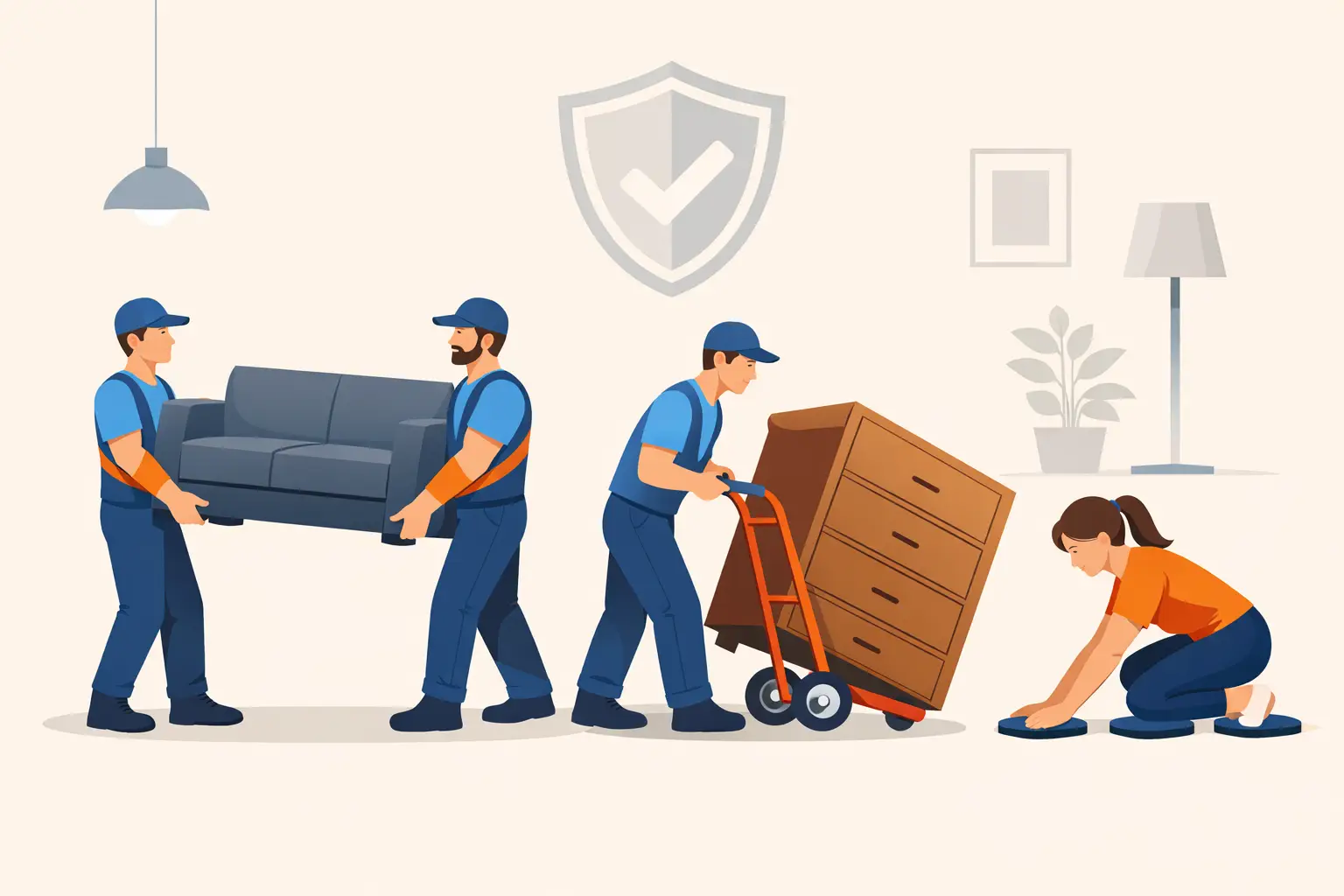
A heavy dresser can turn a simple move into a back injury, a gouged floor, or a dented wall in about ten seconds. The best way to move heavy furniture is not to muscle through it. It is to plan the path, use the right equipment, protect the home, and know when the job needs a proper crew.
That matters whether you are moving out of a condo in Vancouver, shifting a sectional across Burnaby, or clearing an office for a commercial move. Heavy items are not just awkward. They are hard to grip, easy to tilt the wrong way, and unforgiving if your timing is off. A little preparation saves a lot of strain.
The best way to move heavy furniture starts before you lift
Most problems happen before the furniture even leaves the room. People guess at the weight, underestimate tight corners, or forget about the extra height added when an item tips upright. If you want to move a large piece safely, start by measuring the furniture and measuring the route.
Check doorways, hallways, stairwells, elevator clearances, and turns. Remove rugs, shoes, planters, and anything else that can create a slip or trip hazard. Open doors fully and, if needed, take doors off their hinges. It takes a few extra minutes, but it is faster than getting stuck halfway through a turn with a sofa wedged in the frame.
You also want to decide where the piece is going before you move it. Heavy furniture should only be handled once if possible. Shifting a cabinet three or four times around a room wastes energy and increases the chance of damage.
Know what can be taken apart
A lot of furniture feels heavier than it needs to because it is being moved fully assembled. In many cases, the smarter move is to break it down first. Remove drawers from dressers, shelves from bookcases, legs from tables, cushions from sectionals, and glass from cabinets where possible.
This does two things. First, it cuts weight. Second, it makes the item less awkward and less likely to shift while being carried. Drawers that slide open on the stairs or loose shelves rattling inside a cabinet are exactly the kind of small problems that lead to bigger ones.
Keep hardware together in labelled bags and tape them to the furniture or store them in a marked box. That way nothing gets lost during the move.
Use the right moving equipment
If you are serious about finding the best way to move heavy furniture, this is where the answer gets practical. The right tools do most of the hard work.
Furniture sliders are useful for heavy pieces on hardwood, laminate, or low-pile carpet. They help you move weight across the floor without dragging and scratching. Dollies are ideal for boxes, appliances, and some large furniture, but only when the item can be balanced securely. Moving straps can help distribute weight better than your arms alone, especially for bulky items, but only if the people using them know how to coordinate.
Moving blankets matter too. They protect corners, table edges, stair railings, and walls from impact. Stretch wrap can keep drawers and doors closed without leaving tape residue on the finish.
The trade-off is simple. Tools make the move safer and faster, but they do not replace good judgment. A dolly on a flat surface is one thing. A dolly on stairs is another. That is where experience starts to count.
Lift properly, but do not rely on lifting alone
You have probably heard the basic advice – lift with your legs, not your back. That is still true, but it is only part of the picture. Good lifting also means keeping the load close to your body, avoiding twisting, and moving in a controlled way.
What many people get wrong is trying to carry too much of the weight for too long. Heavy furniture should be tilted, slid, pivoted, and guided more than it should be fully lifted. If you can use leverage and equipment to reduce the actual carry, do it.
Communication matters when two or more people are involved. One person should call the move, especially on stairs or tight corners. If everyone is adjusting at once without speaking clearly, the item shifts, hands slip, and someone usually takes the brunt of it.
If a piece feels too heavy at the start, it will not get easier halfway down the hallway. Stop and reset before it becomes a problem.
How to move heavy furniture through tight spaces
Condos, older homes, and office buildings often make the move harder than the furniture itself. Tight turns, narrow entrances, and low ceilings change the approach.
For sofas and couches, the usual move is to stand the piece on end or angle it through the doorway. For dressers and cabinets, you may need to tilt slightly to clear the frame, but not so much that the weight shifts above shoulder level. With tall pieces, watch light fixtures, sprinkler heads, and ceiling bulkheads.
Stairs need a slower pace and stronger control. The person on the lower end usually carries more weight, so you need the right people in the right positions. Short landings can also force awkward pivots, which is where walls and banisters often get marked up.
This is one of those times when the best way to move heavy furniture depends on the building. In a wide, single-level home, good prep and a couple of strong helpers may be enough. In a third-floor walk-up or a downtown tower with elevator booking rules, professional movers are often the safer and more efficient choice.
Protect floors, walls, and the furniture itself
A move is not done properly if the item arrives but the floor is scratched and the walls are chipped. Protection should be part of the plan from the beginning, not something you think about after the first bump.
Use floor runners, cardboard, or sliders to protect hard surfaces. Wrap corners and fragile finishes with moving blankets. Secure doors, drawers, and detachable pieces so they do not swing open during the move. If you are dealing with antiques, real wood, glass-front cabinets, or expensive office furniture, add more padding than you think you need.
Weather can also be a factor in BC. Rain means wet entryways, slippery steps, and muddy paths to the truck. That changes footing and slows everything down. A careful move on a dry day can become a risky one in poor conditions if you are not prepared.
When calling professional movers is the best way
There is no prize for injuring yourself trying to move a piano-sized cabinet with one friend and a rented dolly. Some jobs are better left to a get-it-done crew with the truck, equipment, and experience to handle them properly.
Professional movers make the biggest difference when the furniture is extremely heavy, the access is difficult, the item is valuable, or time matters. That includes large sectionals, solid wood dining tables, safes, filing systems, boardroom furniture, appliances, and oversized bedroom sets. It also includes moves with stairs, long carries, elevator scheduling, or multiple stops.
The real value is not just strength. It is knowing how to load, angle, pad, strap, and move efficiently without turning the day into a drawn-out struggle. A dependable crew can often finish in hours what takes an unprepared household most of the day and a lot more stress.
For homeowners, renters, and businesses across BC, that practical advantage is usually what matters most. Jim’s Moving has built its reputation on exactly that kind of hands-on work – strong crews, proper trucks, and straightforward service that takes the strain off the customer.
Common mistakes that make heavy furniture moves harder
A few mistakes show up again and again. One is trying to move everything at once instead of starting with the biggest problem pieces. Another is skipping measurements and hoping an item will fit. A third is using the wrong vehicle, then struggling with awkward loading heights or poor tie-down points.
People also tend to underestimate fatigue. Heavy moving is physical work, and your form gets worse when you are tired. That is often when fingers get pinched, corners get dropped, and walls take a hit.
The smartest approach is to be honest about the job. If the furniture is manageable, use the right tools and take your time. If the move has real risk built into it, bring in people who do this every day.
The best way to move heavy furniture is the way that gets it from point A to point B without injury, damage, or unnecessary hassle. Sometimes that means sliders and a solid plan. Sometimes it means picking up the phone before your back pays for a bad decision.