

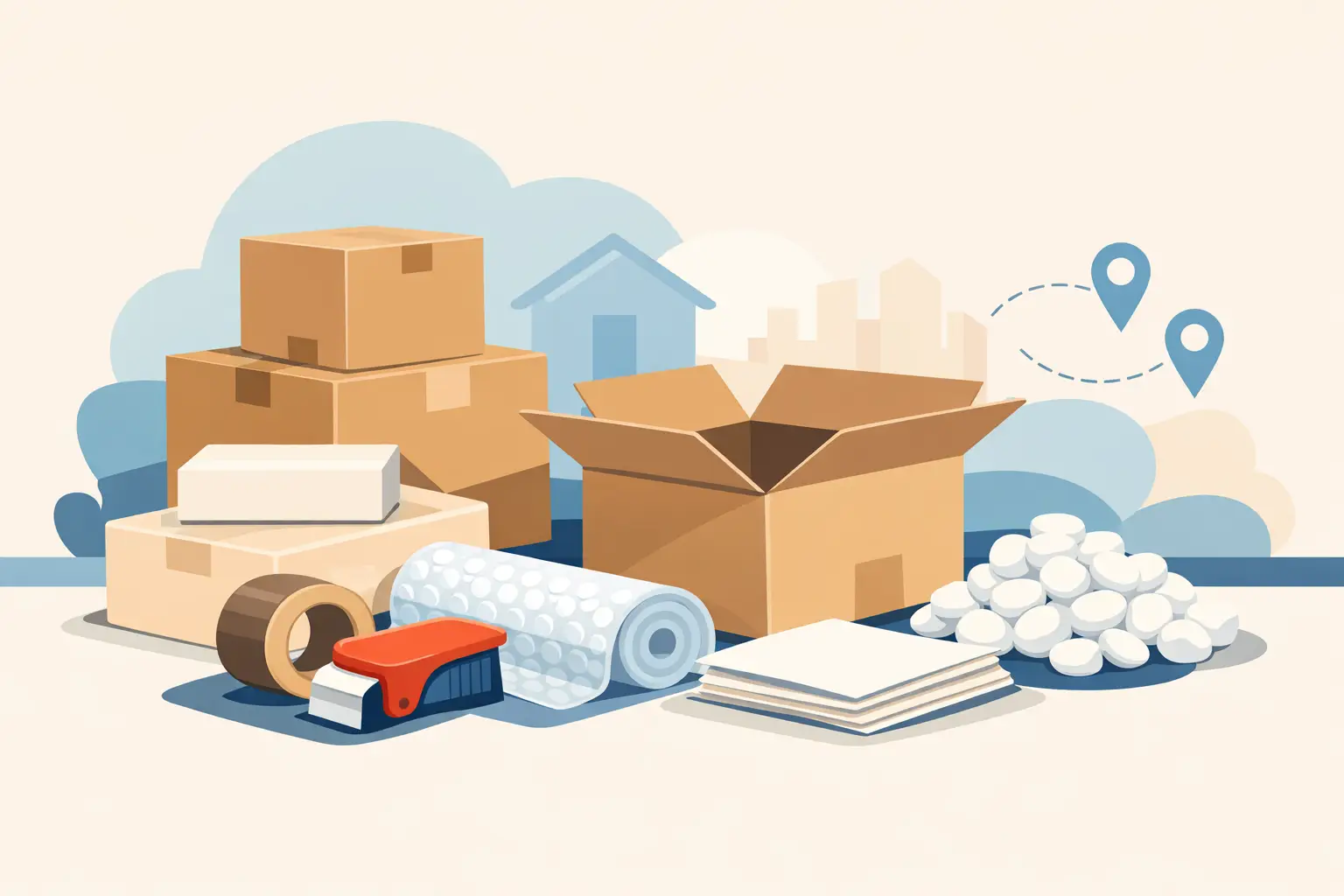
You notice the difference between a well-packed move and a bad one before the truck is even loaded. Boxes split at the bottom, dishes shift, lamp shades get crushed, and suddenly a job that should be straightforward turns into damage control. That is why moving boxes and packing materials are not a side detail. They are what keeps your move organized, protects your belongings, and helps the day run faster.
A lot of people try to save money by grabbing whatever free boxes they can find and stuffing fragile items with whatever is lying around. Sometimes that works for a short move with light items. Often, it creates more trouble than it saves. The right materials do not need to be fancy, but they do need to match the job.
Why moving boxes and packing materials matter
Packing is not just about fitting everything into containers. It is about weight, pressure, stacking, and transport. A box that feels fine sitting in your living room may fail once it is carried down stairs, loaded into a truck, and stacked under three other boxes.
Good moving boxes hold their shape, stack properly, and protect what is inside. Good packing materials reduce empty space, absorb impact, and keep items from rubbing against each other. When both are chosen properly, movers can work faster and your belongings arrive in better condition.
There is also a cost side to this. Cheap or mismatched packing often leads to broken items, longer packing time, slower loading, and more frustration on moving day. Spending a bit more upfront on the right supplies usually saves money compared with replacing damaged goods or dragging out the move.
Not all boxes are the same
One of the biggest mistakes people make is assuming a box is a box. It is not. Different items need different support.
Small boxes are best for heavy items like books, tools, canned food, and small kitchenware. People often overfill large boxes with heavy things, then the bottom gives out or the box becomes too awkward to carry safely. If an item has real weight, keep the box small.
Medium boxes work well for pantry goods, toys, folded clothing, office supplies, and mixed household items. They are the workhorse of most moves because they balance capacity and manageability.
Large boxes are better for lighter belongings such as bedding, pillows, linens, and some decorative items. They are useful, but only when you resist the urge to pack them too heavy.
Wardrobe boxes can save time if you have hanging clothes you want to move without folding. They cost more than standard cartons, so they are worth it for convenience rather than absolute necessity. For some households, especially larger family moves, that convenience is worth every dollar.
Dish packs and specialty boxes are another case where it depends. If you are moving fine china, glassware, mirrors, artwork, or electronics, specialty protection makes sense. If the item is valuable, awkward, or easily damaged, the extra support is a practical choice.
The packing materials that actually do the work
Boxes are only half the job. The materials inside the box are what stop movement and absorb shock.
Packing paper is one of the most useful supplies you can buy. It wraps dishes, fills gaps, and protects surfaces without leaving ink marks like old newspaper can. It is simple, clean, and works for almost every room in the house.
Bubble wrap is good for fragile and breakable items, but it should be used with some judgment. It is great for glass, ceramics, and framed pieces. It is less useful when people overwrap everything and still leave empty space in the box. Protection comes from both wrapping and tight packing.
Tape matters more than people think. Weak tape pops open under pressure, especially on reused boxes or heavier loads. Good packing tape keeps cartons sealed and stable. Cheap tape is one of those false economies that shows up at the worst possible time.
Mattress bags, furniture pads, and stretch wrap also have a place. Soft furnishings pick up dirt easily during a move, and exposed furniture corners can get scraped in hallways, elevators, and truck loading. Protective materials help, especially in wet BC weather or on multi-stop moves where things are handled more than once.
Free boxes versus new boxes
People ask this all the time, and the honest answer is that it depends on what you are packing.
Free boxes can be fine for light, non-breakable items if they are clean, dry, and still strong. But used boxes come with risks. They may have weakened corners, soft spots, or hidden damage from moisture. Grocery and liquor store boxes can also be odd sizes, which makes stacking harder and loading less efficient.
New boxes cost more, but they are consistent, sturdy, and easier to work with. For fragile items, electronics, documents, kitchenware, and anything valuable, new boxes are usually the safer bet. They also make the truck pack tighter and cleaner, which matters when you are trying to protect a full load.
If your goal is the least stress, period, use free boxes selectively and save the strong, properly sized cartons for the items that matter most.
How to match supplies to each room
The kitchen usually needs the best packing materials because it combines fragile items with heavy ones. Glasses, plates, bowls, and small appliances all need different treatment. Use small to medium boxes, wrap breakables individually, and keep heavier items on the bottom.
Bedrooms are more straightforward. Clothing, bedding, and personal items can often go in standard cartons, bags, or wardrobe boxes. The main issue here is staying organized so unpacking is not a mess later.
Living rooms are mixed. Books, decor, electronics, lamps, and framed items all need different levels of protection. Books should go in small boxes. Electronics should be packed snugly, ideally with original packaging if you still have it. Frames and mirrors need flat, reinforced protection.
Bathrooms are easier, but liquids need extra care. Tape lids shut and pack cleaning products separately from towels or toiletries. No one wants an unpacking surprise caused by a leaking bottle.
Garages, storage rooms, and workshops need sturdy boxes and common sense. Tools, hardware, and dense equipment should never go into oversized cartons. Weight adds up fast, and those boxes become dangerous to carry.
Packing properly saves time on moving day
People usually think of packing as something that happens before the move. In reality, it directly affects how the moving day goes.
Well-packed boxes are faster to carry, easier to stack, and simpler to place in the truck. Clear labels help too. If cartons are marked by room and fragile status, the crew can load smarter and unload faster. That means less time spent sorting, shifting, and asking where things go.
Loose, overfilled, or badly sealed boxes slow everything down. They need extra handling, they cannot be stacked confidently, and they increase the risk of damage. If you are paying hourly, poor packing can cost you twice – once in materials that did not do the job and again in added labour time.
That is one reason experienced movers put real emphasis on preparation. A get it done crew can move fast, but speed only works when the boxes and packing make sense.
When it makes sense to get help
Some moves are simple enough to handle on your own. Others are not. If you are packing a full family home, managing a long-distance move, dealing with office equipment, or trying to move on a tight timeline, getting proper supplies and experienced help can take a lot of pressure off.
This is especially true for people moving in Vancouver and Burnaby, where traffic, elevators, parking, and tight access can turn a basic move into a long day. In those situations, the less rehandling and repacking you need to do, the better.
Jim’s Moving has been doing this for over 20 years, and one thing stays consistent – good packing makes everything easier. Strong crews matter. The right truck matters. But solid boxes, proper wrap, and practical packing choices are what give your belongings a fair shot from start to finish.
What to keep in mind before you buy
Do not buy supplies based only on price. Think about what you own, how far it is going, and how much handling it will go through. A local apartment move may need less protection than a long-distance family move through bad weather. A one-bedroom unit is different from a packed office or a house with years of accumulated belongings.
Buy enough, but not wildly too much. Running out of tape and paper halfway through packing is frustrating. Overbuying specialty cartons you never use is wasteful. If you are unsure, get advice based on the size and type of your move rather than guessing.
The goal is simple. Use moving boxes and packing materials that fit the weight, fragility, and volume of what you own. That keeps the move safer, quicker, and easier to manage. And when moving day arrives, practical preparation always beats last-minute scrambling.