

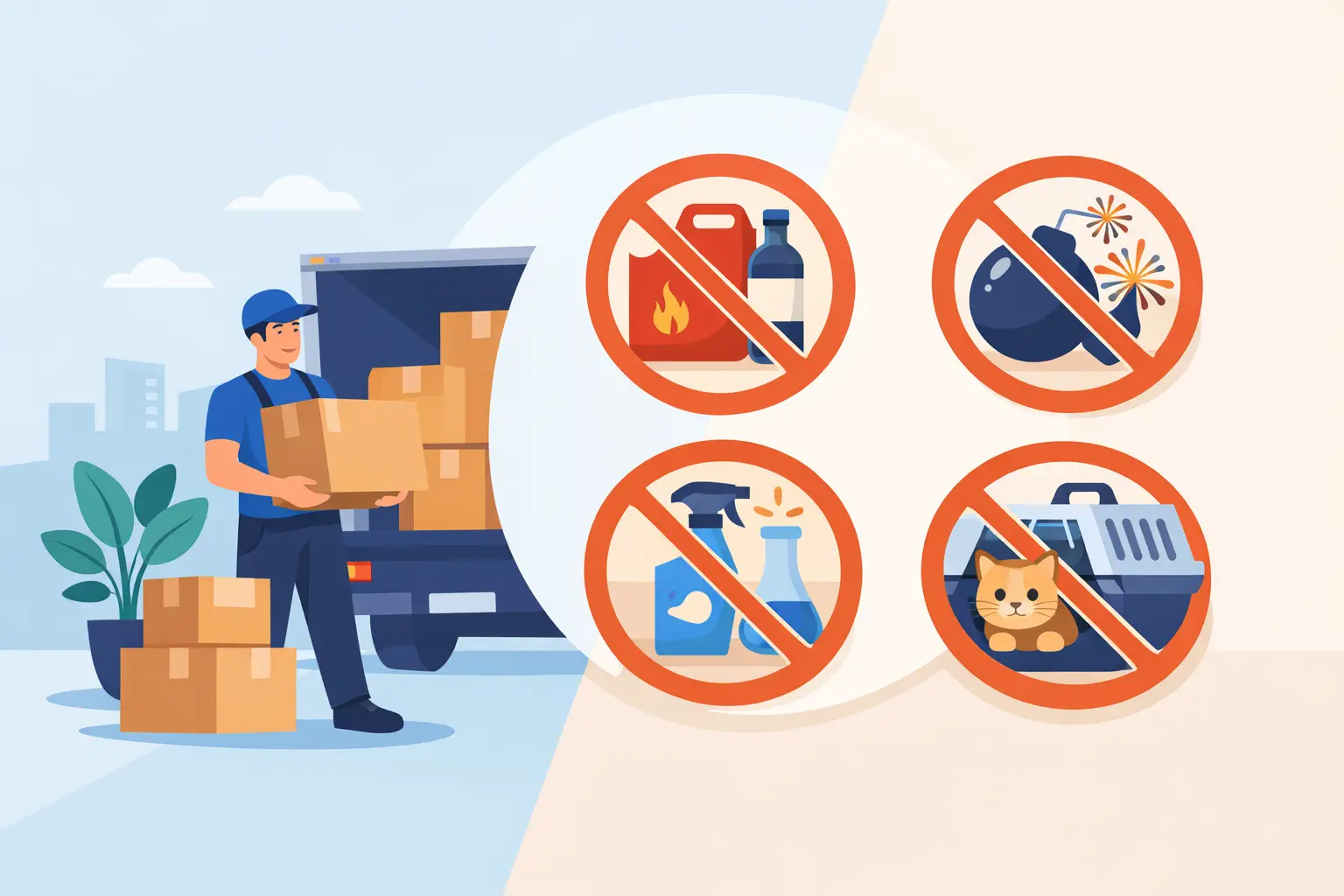
You do not want to find out on moving day that half a closet, a garage shelf, or the freezer contents cannot go on the truck. That is usually how delays start, and delays cost time, money, and patience. If you are wondering what items movers will not move, the short answer is this: anything unsafe, illegal, perishable, or too high-risk for a standard household move is likely off limits.
That does not mean you are stuck handling everything alone. It means you need to separate the items that belong on a moving truck from the ones that need special transport, disposal, or your own vehicle. A good move runs smoother when there are no surprises, and this is one of the biggest ones people miss.
What items movers will not move most often
Professional movers are there to load, protect, transport, and unload household or office goods. They are not there to haul dangerous materials, break the law, or take responsibility for things that can spoil, leak, explode, or create liability. Rules can vary a bit between companies, especially for local versus long-distance moves, but the common no-go categories are pretty consistent.
Hazardous materials are at the top of the list. That includes gasoline, propane tanks, paint thinners, lighter fluid, pool chemicals, pesticides, fireworks, ammunition, and many cleaning solvents. Even if the container looks sealed and harmless in your garage, it can become a real problem in a truck packed tight for hours. Heat, pressure, tipping, and vibration change the situation fast.
Perishable food is another common restriction. Frozen food, refrigerated items, open pantry goods, and anything that can spoil or attract pests usually should not be loaded. On a short local move, some people assume it is fine, but even then it depends on the weather, timing, and the company policy. If a truck gets held up, the risk is on you.
Plants often fall into a grey area. Some movers will carry houseplants on a local job if conditions are right, while others will not move them at all. Plants are fragile, sensitive to temperature swings, and messy if soil spills in the truck. For longer-distance moves, they are even more complicated.
High-value personal items are another category many movers prefer you keep with you. Cash, jewellery, passports, birth certificates, wills, laptops with sensitive data, family photo albums, and irreplaceable keepsakes are better transported in your own car. It is not because movers do not care. It is because these items carry too much personal or financial risk.
Why movers refuse certain items
This is not about being difficult. It is about safety, insurance, and common sense.
A moving truck is not built like a hazmat vehicle or a climate-controlled vault. Movers are stacking furniture, boxes, and equipment for efficient transport, not isolating chemicals or monitoring food temperatures. If something leaks, ignites, or breaks open, it can damage everything around it and put the crew at risk.
There is also the insurance side. Standard moving coverage does not work the same way for every item. Certain belongings are excluded or limited, especially if they are inherently dangerous, unusually fragile, or extremely valuable. When people hear that something cannot be moved, they sometimes take it personally. Usually, the company is trying to avoid a situation where nobody is protected if something goes wrong.
There are legal issues too. Some items cannot be transported under standard commercial conditions, especially across longer routes. Fuel, explosives, and certain chemicals are obvious examples. Firearms can also be complicated depending on storage, documentation, and the type of move.
Hazardous items you should plan to remove early
If you want an efficient move, deal with your hazardous materials before packing day. Do not leave them for the crew to sort out at the curb.
The usual problem items include gasoline cans, motor oil, paint, aerosol cans, propane cylinders, charcoal starter fluid, bleach, ammonia, nail polish remover, pesticides, fertilizer, and batteries that are damaged or improperly stored. Garages, sheds, utility rooms, and under-sink cabinets are where these items pile up.
Some things can be used up before the move. Others should be taken to an approved local disposal facility. If you are not sure whether an item counts as hazardous, assume it might and ask before moving day. That quick check can save a lot of wasted time.
The garage is where trouble usually starts
People are careful with the living room and bedrooms. Then the crew opens the garage and finds half a workshop that cannot legally or safely go on the truck. Paint tins, gas-powered equipment with fuel still inside, propane for the barbecue, and random chemical containers are common last-minute issues.
If you have lawn equipment, drain the fuel and oil if required, clean it up, and check with your mover about whether the equipment itself can be transported once emptied. The machine may be fine. The fuel is usually the problem.
Valuable and personal items movers may ask you to carry
If it would be a nightmare to lose, delay, or replace, keep it with you.
That includes cash, jewellery, medication, prescription glasses, passports, legal files, tax records, external hard drives, sentimental letters, and heirlooms. For businesses, it also includes confidential records, backup drives, company cheques, and sensitive electronics.
Some customers assume that if an item is small, it is easier to let the movers handle it. In practice, small valuables are often the easiest things to misplace during a busy move. Keeping a personal essentials bag or lockbox with you is the safer call.
Medication should never be packed deep in the truck
This one matters more than people think. Prescription medication, medical devices, and anything you may need the same day should travel with you. Delays happen. Access matters. The same goes for kids’ essentials, pet medication, chargers, and a basic overnight bag.
Food, plants, and living things
Movers generally do not transport pets, and they should not. Pets need proper ventilation, supervision, and a calm environment. A moving truck is no place for an animal.
Food is more mixed, but the safest approach is to assume perishables are your responsibility. Dry, sealed food may be acceptable in some cases, but open containers, frozen food, and refrigerated goods are a poor bet. If you are moving locally and want to save groceries, use coolers in your own vehicle.
Plants are worth asking about early if you plan to bring them. A few sturdy houseplants on a short move might be manageable, but delicate, tall, or messy plants can create problems. If the weather is very hot or very cold, moving them yourself is usually the better option.
Items that are too fragile, oversized, or specialty
Some items are not strictly forbidden, but they may require special handling or a clear discussion ahead of time. Think pool tables, pianos, gun safes, aquariums, large stone tops, fitness machines, and very heavy appliances.
These are not casual add-ons. They affect crew size, truck space, tools, timing, and risk. If you mention them only when the movers arrive, you put the whole move off schedule. A dependable company can often handle difficult items, but only if they know what is coming.
The same goes for extremely fragile pieces such as glass art, chandeliers, antique mirrors, or custom electronics. Some movers will transport them if they are packed properly. Others may limit liability or recommend a specialty service. It depends on the item, the distance, and how it is prepared.
How to avoid problems before moving day
The fix is simple: sort early and ask direct questions.
Walk through your home, storage locker, garage, and balcony at least a week ahead of the move. Set aside anything hazardous, perishable, sentimental, or unusually valuable. Make a separate plan for those items instead of hoping they will fit on the truck.
Then give the moving company a realistic picture of what you have. Mention large safes, treadmills, plant collections, garage chemicals, and specialty furniture upfront. Honest details lead to better planning, proper crew size, and fewer surprises.
If you are packing yourself, label boxes clearly and do not hide restricted items inside regular cartons. A box marked books should not contain bleach, batteries, and a propane torch head. That creates risk for everyone handling it.
At Jim’s Moving, the practical approach is the right one – tell the crew what you have, separate the problem items early, and keep the move focused on what can be loaded safely and efficiently.
A quick rule that helps
If an item can burn, explode, leak, spoil, die, or cause a major headache if lost, do not assume it belongs on the moving truck. Ask first.
That one habit saves people a lot of grief. Moving is already enough work without arguing over a gas can, a freezer full of food, or a box of documents you should have kept in your own car. The smoother move usually comes down to simple planning, and this is one of the easiest places to get ahead of the day.